FRAIMwork opens the conversation on smarter renovation
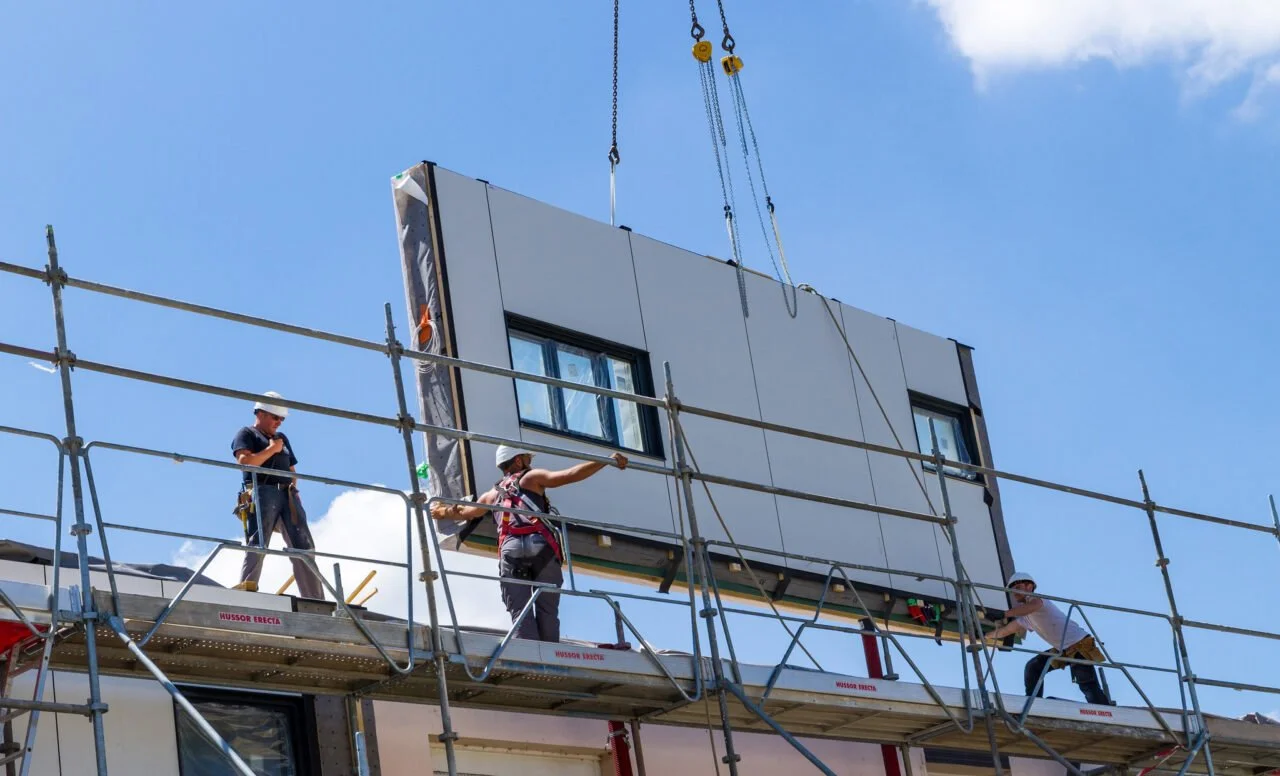
How can smaller buildings be renovated faster, with less waste and disruption?
On 9 June 2026, FRAIMwork brought together project partners and external experts to discuss the renovation system it is developing and gather feedback at an early stage.
The online meeting introduced three key parts of the FRAIMwork approach: prefabricated façade panels, digital tools and robotics. It also marked the start of an ongoing dialogue with stakeholders, who will help shape the system throughout the four-year project.
A renovation solution for smaller buildings
Renovating Europe’s existing buildings is essential to reducing energy use and carbon emissions. Yet many smaller buildings remain difficult and expensive to renovate.
Prefabricated systems can speed up the process by producing building components in a factory before installing them on site. However, many existing solutions are designed for large buildings or rows of similar homes. They are often less suitable for individual buildings, particularly in historic or densely built areas where access for cranes and heavy equipment is limited.
Renovations also require skilled workers, who are in short supply across Europe. Bespoke work carried out on site can take a long time, increase costs and create materials that cannot easily be reused.
FRAIMwork aims to address these challenges by developing a renovation system specifically for smaller, one-off buildings.
Combining panels, digital tools and robotics
At the centre of the FRAIMwork concept is a modular system for improving a building’s exterior walls.
A supporting frame is attached to the existing façade, after which prefabricated panels are mounted onto it. Each panel can be removed separately. This means that a damaged panel could be repaired or replaced without having to remove the rest of the façade. Different types of panels could also be installed as the building’s needs change.
Digital tools will connect the different stages of the renovation process. A building is first scanned to create an accurate digital model. This model can then support the design and production of the panels, guide their installation and provide information for future maintenance or reuse.
FRAIMwork is also developing robotic equipment to support the work on site. This includes a climbing robot designed to move across façades and install anchors, as well as a compact crane that can lift and position panels accurately.
The aim is not to remove people from the renovation process, but to make physically demanding and precise tasks safer and easier. Robotics could also reduce the need for highly specialised workers and make the system more practical in locations that are difficult to access.
Together, these innovations are intended to reduce renovation costs by 25%, cut waste by 30% and shorten on-site installation time to just two days. Less time spent working at the building could also mean less disruption for residents.
Early feedback helps shape the system
The project is still at an early stage, which means that important design decisions have not yet been finalised. This makes input from contractors, building experts, technology developers and other stakeholders particularly valuable.
During the first meeting, participants discussed several practical challenges. These included how to protect the spaces between the panels against wind and water, and how digital building scans should be checked against physical inspections.
These examples show why stakeholder involvement is important. A system may work well in a digital model, but it also needs to respond to uneven walls, restricted access, changing weather conditions and the realities of construction work.
The consortium will use this feedback as it develops and tests the panels, robotic equipment and digital tools.
From concept to real buildings
The FRAIMwork approach will be tested at three pilot sites in Belgium, Germany and France. The sites have been selected to represent different climates and building conditions across Europe.
Stakeholder meetings will take place every six months, alternating between online and in-person sessions. At future meetings, the project team will also report back on how earlier feedback has influenced the development of the system.
FRAIMwork’s ambition is to create a faster and more resource-efficient approach to renovation that can be used by local contractors, rather than only by a small number of specialised companies.